Monday, January 31, 2011

Ritual - Solo Andata


Ritual

Solo Andata
Desire Path Recordings.

SCQ Rating: 79%

What Solo Andata are doing, frankly, no one else is. That’s apparent as early as their LP Ritual’s first track, a slow-burning surge of buzzing, chirping, and whirling which approximates how we’d all hear nature if we lay drugged-up and motionless in a forest. More than a mesmerizing exercise in organic drone, ‘Aggregate’ speaks through our internal understanding of nature, the groundwork of likelihoods and curiosities we’ve nurtured since childhood, and reinforces them over any disciplines we as listeners might pride ourselves on – steadfast against those who’d refer to Ritual as tedious noise.

In other words, Ritual takes us beyond the argument of electronics trying to be “warm” as opposed to “cold” and into aural space positively dripping with characteristics. It isn’t just the vague liquid-y effects that make ‘Myrmecia’ so foreboding, but that its miniscule streams surfacing through soiled cracks are met by tones that wouldn’t sound out-of-place on a convincing thriller score. Even if Solo Andata are wielding loose structures at their suspenseful prime, those moments arrive comprised of natural dimensions; no differently than water droplets for percussion, ‘Myrmecia’’s creepy high-registering synths are mistakable for distant, possibly pitch-shifted crickets.

Since the creation of Ritual, without many obvious instrumental tell-tales to speak of, is clearly beyond my technical comprehension, the intentions of this review really cater to what I’d prefer to emphasize in the first place: Solo Andata’s half-formed but articulate universe, how it envelops and how adjectives can be worth just as much as nouns. When ‘Incantare’ unfolds into a twenty-minute dreamscape, replete with a variety of echoed sounds that stitch together a moving, ever-changing environment, the listener couldn’t care less how this illusion was practically designed and constructed.

Such is reflective about Ritual and all good ambient records, for that matter; they blindfold and let you grapple for progressions or aural signposts to find your way and, at the best of times, like the disembodied hands swimming in textures, we submit ourselves to its course.

Diamond Eyes - Deftones


Diamond Eyes

Deftones
Reprise Records.

SCQ Rating: 76%

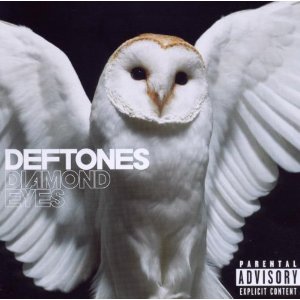
As I sit here in the darkly lit confines of the SCQ office, a jack-and-coke fizzling on one side and a sullen owl’s jewel-cased eyes glaring to my right, I fully recognize that I’m not a massive Deftones fan. Maybe I’ve never struggled with the level of testosterone necessary to warrant devotion for Adrenaline or Around the Fur, but those weren’t prerequisites for being hell-bent absorbed by White Pony’s preening hybrid of Pro-Tools soundscapes and metallic riffs. Moreover, Saturday Night Wrist beckoned my formative years at their most nocturnal, cooing the drowned-out atmospheres of ‘Cherry Wave’ and ‘Xerces’ while I sunk deeper into my apartment tiles at 4am.

In other words, I’ve tailored an impression of Deftones – an emphatically beloved one – by ignoring the crunchier, less layered half of their discography. That 2003 self-titled effort? Yah, never heard a note of it. So, despite my slanted perspective suppressing my first-listen until four months post-release, Diamond Eyes remains my most anticipated Deftones album.

Whatever’s always struck me as rhetorical about metal’s riff tendencies – those insular, chugging repetitions – falls by the wayside when Chino’s running the mic, and his dramatic turns pitting heartfelt croons against guttural screams feel increasingly nuanced over the opening title track. Tight, spitting verses pave to more elegiac, even-keeled choruses on ‘Royal’ but the outfit’s sixth record begins transforming at the onset of ‘CMND/CTRL’, a pulverizing riff that worms inside-out like a lassoed intestine – visceral, scathing and beautifully compact.

A switch-up, then; a widening of scope that with ‘CMND/CTRL’ and ‘You’ve Seen the Butcher’ begins to create a narrative evocative more for its use of keys and space than the relentless guitar-work overtop. And for Diamond Eyes’ first crossover track (read: not metal), ‘Beauty School’, to land square after such a punishing sequence of events seems like a rare mid-album victory round; one of those we-can-write-modern-rock-songs-in-our-sleep reminders.

‘Prince’, with its loitering-alley of a bass-line, calls to mind one of the few compositional mainstays of the Deftones’ canon and reflects briefly on what’s come before. None of these songs have rocks in their pockets like the whole of Saturday Night Wrist heaved, and both LPs benefit from this sharp-as-knives contrast. Diamond Eyes’ palette remains even stricter than that of White Pony and, although I’d be remiss to expand upon the band’s pre-millennial output, the furor of ‘Rocket Skates’ surely suggests the band’s early, aggressive styling.

A new drink in time for Deftones’ first subdued breath, as ‘Sextape’ bends morning’s bedroom glow around pared-down rumblings and Chino’s most conventional, sing-along chorus this side of ‘Change (In the House of Flies)’. One song over and ‘976-Evil’ takes an increasingly full-blooded approach on the same thick melancholy. Even for the staunchest fan of their break-neck material, these slower numbers are to be savoured; too seldom (save Saturday Night Wrist) do Deftones encourage this kind of self-exploratory navel-gazing, even when they execute it so well.

As alluring as Diamond Eyes’ back-story tries to steal what is ultimately Eros’ back-story, I’ll avoid stretching for the emotional shortcuts many die-hards have already cut and pasted. Perhaps because despite my admiration for Deftones’ ability to pull me toward the fringe-nexus of metal, scream-o and their indefinable them-ness, I’m still not a massive Deftones fan. Diamond Eyes, for all its frothy and acute presence, doesn’t alter my positioning in the Deftones’ directional debate so much as sedate me to their possibilities. With their hardest, most concise offering, Deftones succeed in pulling me helplessly toward the primeval pole of their sound.

Thursday, January 20, 2011

Deerhoof VS Evil - Deerhoof


Deerhoof VS Evil

Deerhoof
Polyvinyl Records.

SCQ Rating: 79%

Even amid their most successful releases – Runners Four and Friend Opportunity both spring to mind - Deerhoof have reigned but a marginalized fraction of the indie-rock throne, attaining no shortage of good press but a fickle fanbase. Why that is likely breaks down to every obvious suspicion we’ve assumed playing their parts; Satomi Matsuzaki’s cute-when-rationed vocals, the band’s playful teasing with commercial templates – these obstinate traits come to mind anytime an album (cough, Offend Maggie) comes and goes with virtually no worthwhile mention to speak of. For sixteen years now, Deerhoof have welcomed a diverse crowd of fans both casual and curious to dance along their weirdo-fringe and it’s no surprise that, on a release-by-release basis, scores of them fall indifferently by the wayside.

From a single spin, Deerhoof VS Evil looks to bolster and register that fickle public until at least the next full-length. They’ve abandoned San Francisco and “what a Deerhoof record sounds like” but rumbling deep from within a forest of drum-edits and twee-leaning harmonics, ‘Qui Dorm, Nomes Somia’ bursts forward like Deerhoof 3-D; their hooks more digestibly defined, their impatient tempo-shifts finessed but punctuated with a volume befitting of college radio. Rarely have verse and chorus been as identifiable and concrete as on ‘Behold a Marvel In the Darkness’, nevermind how Matsuzaki’s sweet vocals bait a ferocious, distortion-filled riff that while central to the song, never gets old. Credit Deerhoof with some serious production props: Greg Saunier’s dexterity behind the kit, already imposing over many of these tracks, has an added depth to it, while miniscule embellishments like the starlit synths keeping ‘Hey I Can’ airborne, leave little room for boredom.

Is there weirdness, though? You bet there is, only this time it’s less divisive than on past efforts. Aimless but brief ambles ‘C’Moon’ like a practicing improvisation, but these intermezzos link naturally to their always appealing neighbour (what would ‘Let’s Dance the Jet’ be independent from its half-second-detached highlight ‘Super Duper Rescue Heads!’…). So easily and repeatedly consumable, Deerhoof VS Evil should offer pause after all of the praise Friend Opportunity received for being so pop-oriented and accessible. This is the band’s liberation-point, a maturing moment where they’re able to pull the mainstream tablecloth toward them without breaking anything. A fleeting dose of indie-rock spiked with dream-pop, this battle against Evil finds Deerhoof fighting the good fight.

1313 - Jerry Granelli


1313

Jerry Granelli
Divorce Records.

SCQ Rating: 67%

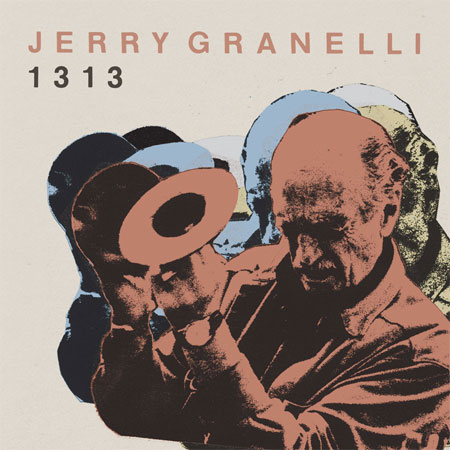
Those in pursuit of minimalist treasures take note: Jerry Granelli, a veteran percussionist who graduated the San Francisco Jazz scene to work as a session-player for the likes of Vince Guaraldi, has gone solo. Finally, at the age of seventy, and if Granelli’s timing wasn’t enough to file his solo debut under the label “curious footnote” for a career so colorful, 1313 boasts percussion and nothing but. Even a few years ago, I would’ve found the existence of solo drum records easier to swallow than a rabid fanbase actively seeking them out; oh, if only I’d heard Granelli’s improvisations at my most ignorant and impressionable.

Still, 1313’s creation - in a single take, with minimal overdubs – represents a challenge to anyone who prefers the imaginative possibilities of the studio. Granelli’s imposed limitations, too numerous to list, are gradually upstaged by a discipline which bridges the gap between experimental and accessible. The dimensional quality of ‘A Nice Bunch Of Guys’, with its several rhythms conversing at once, meets expectations but just shy of Granelli’s multi-talented vision: moments when Granelli becomes a full-band virtuoso on the kit. Warmth and weirdness flow from the strung-up bell melody of ‘Walking On a Road With Some Bells Around Your Neck’ as a patient kick-drum moonlights for a bass. Following experiment ‘Wait For the Machine’ takes a similarly structured/nonsensical tune through a series of drum deconstructions that bizarrely parallel Tortoise’s odd freak-out.

Some wise sequencing ultimately prevents too many of these full-band illusions from taking shape, thereby crafting a stronger statement in spite of some dwindling sparser moments. Facing my own listener-limitations on this niche recording, I best enjoy when 1313 sounds like more than a well-armed drum-kit at work (as on the creeped-out airship drones of ‘Love Song For U’) – mostly for the sake of variety but also because I like knowing that it isn’t.

Future Weather - The War On Drugs (No Ripcord Review)


Future Weather

The War On Drugs
Secretly Canadian Records.

No Ripcord Rating: 6/10
SCQ Rating: 66%

In a crudely reductive way, anyone’s record collection can break down into two camps: albums we rely on for public consumption (house-parties, get-togethers) and albums we rely on for personal satisfaction. Every host should instinctively play to their crowd’s communal preference, meaning that my obsession for introverted electronica gets roundly ignored every time people pack my fridge with beer. Oh, the trials of amateur deejaying. So when The War On Drugs first stole my heart with Wagonwheel Blues, they managed the task by merging two unique and combative listening experiences into one. Their muse clearly rooted in classic rock but bearing a spacey reverb so rich it nearly swallows the whole procession, The War On Drugs presented a hybrid so seamlessly built, you could just as easily socialize or zone-out to its chameleon-esque company.

As word of Future Weather surfaced, promising a heavier use of keys and ambience following Kurt Vile’s no-surprise departure, I rejoiced in what ostensibly sounded like a nudge toward their cosmic end. 'Comin’ Through', with its steadying Tom Petty-approved bassline, and 'Brothers', leveled in exploratory guitar-jams, both prove that The War On Drugs’ perfect fusion of a template allows some elbow room for extra experimentation, but these are exceptions to the rule. Typically this gauzier finish forces a sacrifice, as how 'The History Of Plastic', which consumes nearly a third of Future Weather’s run-time, lumbers through a studio’s trick-bag with nothing to show for it. What’s worse, its final two-and-a-half minute stretch of disconnected sounds cap off an EP loaded with empty space.

Segues and reprises embody three of these eight tracks but none are built to sustain themselves, or even add any majesty to their parent song. 'Comin’ Around' finds the band loosely jamming around the perimeter of 'Comin’ Through' whereas 'Missiles Reprise' muddles needlessly between the chords of 'Baby Missiles', which itself operates a lean A to B trajectory with familiar organ-work and grinding percussion. Yes, some of these grooves still beckon the open road, but our intended destination is getting a little murky.

The War On Drugs haven’t undergone any major songwriting shifts with Future Weather and yet a quiet divide over direction steals the bite of these songs. It’s almost as if Adam Granduciel and Co. isolated their dual strengths - the riffs and the sound-collages - into separate songs, streamlining their classic-rock tunes while letting vacuous sound-collages fend for themselves. Perhaps Kurt Vile was the engineer capable of fusing these song-pieces or maybe The War On Drugs are simply withholding the best cuts for their upcoming 2011 full-length. Sadly, neither of these excuses warrants buying this vinyl-only 12” at a dollar-per-minute rate, especially when a solid half of Future Weather feels so aimless.

(This review was originally published on No Ripcord...)

Monday, January 17, 2011

Introducing… Standard Form’s Rural Route Series


Standard Form, a print shop and publishing-house based out of Toronto, first caught my attention when I spotted eye-catching 3” CD-Rs of Muskox and Feuermusik displayed on the shelves of Soundscapes on College Street. Their foray into music wouldn’t directly impact me until Kyle Bobby Dunn delivered his Rural Route No. 2, an EP I loved but ignorantly failed to understand its title as part of a bigger project. Finally, when Samu Kuukka from Gentleman Losers announced his participation in No. 5, I researched what each of these unassuming Standard Form releases were compiling into; namely, a concept-driven but creatively freewheeling collection of compositional essays detailing a variety of artists’ musical representations of “home”. Each musician was encouraged to take an experimental angle and delve into notions of memory, belonging and how that all relates to private geographies.

I was smitten with it, and in November set out to write up the collected works in all its unfurling, unending glory. With the help of Damian Valles, artist and curator of this series, I’m pleased to shed some additional light on this one-of-a-kind project that’s giving Canada’s electronic-music profile a serious shot in the arm.